

Mortgage for a new-build apartment in Armenia: terms, down payment, documents
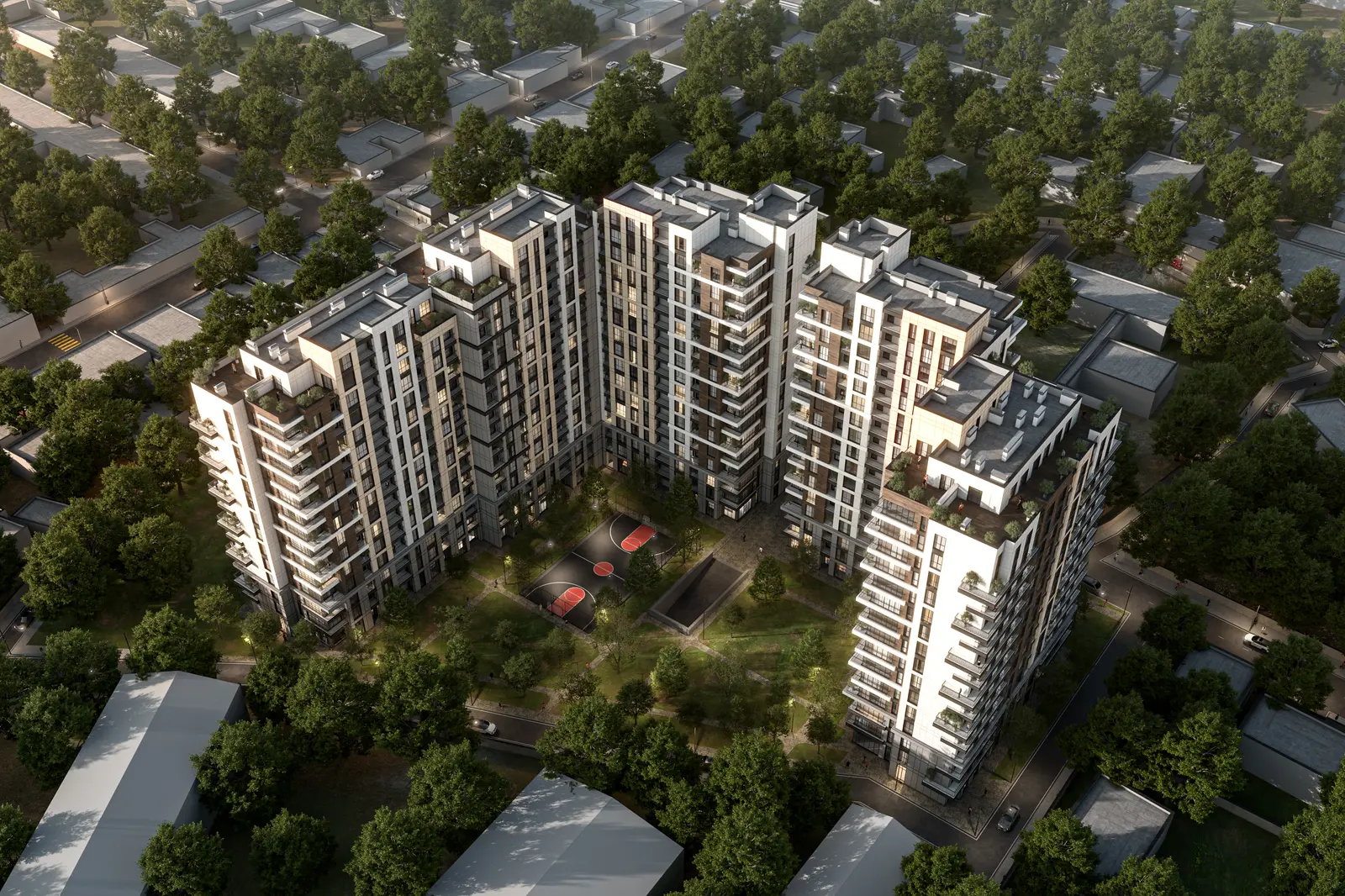
A mortgage for a new-build apartment is a bank loan type provided for purchasing an apartment and repaid through monthly payments.
Typically, to grant a mortgage, the bank requires paying a portion of the apartment's price from personal funds as a down payment, as well as officially verifying the personal income from which the loan will be repaid.
In this blog, we will discuss everything about new-build mortgages: how they differ from secondary market mortgages, who can qualify, what documents need to be submitted, what main terms and rates apply at banks, and more.
How a new-build mortgage differs from a mortgage on a finished home
Many people believe that getting a mortgage is always the same process, regardless of whether you are buying a finished apartment or a new build. In reality, a new-build mortgage has a number of nuances that must be considered.
First, since the apartment is often purchased during the construction phase, it may not yet have an official registration. Therefore, pledging it to the bank is handled differently.
Additionally, while purchasing finished property makes your income the most crucial factor for the bank, a new build also involves a thorough review of the entire construction project and the developer’s reliability.
What is pledged before apartment registration
As long as the building has not been commissioned and ownership rights are not registered, banks apply special collateral mechanisms. At this stage, the property right being acquired to the future real estate is generally formalized as collateral. This process undergoes notarization and state registration at the Cadastre Committee, ensuring full legal reliability until construction is completed.
What the bank checks about the developer and the project
Before approving the loan, the bank carefully studies the developer’s reliability, experience, and documents certifying the legality of the construction. As a rule, banks only work with projects that meet their internal standards.
Who can get a mortgage loan
Taking out a mortgage is a responsible step that often determines your finances for the next 5, 10, or even 20 years. Unsurprisingly, banks approach this process with strict rules and patterns.
Although each bank may have its internal requirements, the core approaches to creditworthiness assessment are similar. The bank must be sure that you have a stable income and can make your monthly payments without excessive financial burden.
Income and employment
The most important factors for loan approval are your income and employment history. Banks typically require officially justified income, as well as work experience. Your credit history and the expected age of the borrower at the maturity of the loan also matter significantly. Your credit history must be clean, and your age must comply with the bank's thresholds.
Citizens, residents and non-residents
Mortgage terms for Armenian citizens and residents are based on standard local procedures.
Non-residents and foreign citizens also have the opportunity to get a mortgage in Armenia. In this case, banks establish additional legal and document requirements, and loan approval is granted only if these requirements are met. Read more about this via the following link.
Down payment
When getting a mortgage, the down payment directly affects the likelihood of loan approval and its terms. Down payment amounts set by banks may vary depending on internal policy, loan currency, and other conditions.
What down payment banks require
In most Armenian banks, the minimum down payment for mortgage loans in AMD starts at 10% of the property value.
The required down payment may be higher if the loan is issued in foreign currency or if there are additional risks. Banks often require a larger down payment from non-resident borrowers.
Where the funds can come from
The funds used for the down payment must be entirely legal and well-documented. These are primarily your personal funds and savings, which are deposited into the bank or transferred to the developer in advance.
Banks thoroughly check the origin of these funds, so it is important to have documents confirming their legality in advance.
Interest rate, currency and term
Understanding mortgage terms allows you to properly assess your monthly budget and avoid unnecessary expenses. In this section, we will take a detailed look at the core features of interest rates, currency selection, and repayment terms.
Nominal and effective interest rate
When taking out any loan, it is important to distinguish between the nominal interest rate and the annual effective interest rate. The nominal rate is the basic rate used to calculate monthly interest, while the effective rate also includes all additional expenses.
For AMD mortgages, nominal interest rates often range between 11–15%. The rate can be either fixed or floating. A fixed rate remains unchanged throughout the entire loan term, whereas a floating rate may change depending on market fluctuations.
In case of early repayment, most Armenian banks do not apply penalties or have minimal requirements.
Loan currency and exchange-rate risk
The golden rule here is simple: when taking out a loan, choose the currency in which you earn your primary income to completely eliminate risks associated with exchange rate fluctuations.
Foreign currency mortgage loans in Armenia are primarily provided to non-residents whose income is generated abroad.
Term and monthly payment
The maximum loan term in Armenia is typically 240–360 months. To choose the right term, remember: the longer the term, the lower the monthly burden, but the higher the total interest paid.
To get a clearer picture of your options, let's use the FOUNDER mortgage calculator for an approximate calculation[cite: 10].
Suppose you choose an apartment in the Tichina 5 residential complex that costs AMD 40,000,000, and the bank requires a 10% down payment of AMD 4,000,000. This means the loan amount is AMD 36,000,000. If, for example, the bank's interest rate is 12%, and you choose a 240-month term with an annuity repayment method, the monthly payment will be approximately AMD 397,000.
You can explore other examples and nuances in our mortgage calculation guide.
Required documents
To get a mortgage loan, you need to prepare the required document package in advance. It consists of two main parts: the borrower's financial and personal data, and contracts related to the acquired new build.
Borrower documents
This package includes information confirming your identity and income, which the bank uses to assess your creditworthiness.
✓ Identity documents: Passport or ID card, social services number, marriage certificate if applicable.
✓ Income verification documents: Official certificate from your workplace (position and salary), bank account statements, or tax returns if you have self-employed or business income.
✓ Credit history: The bank checks this independently through the credit bureau, so you generally do not need to provide a separate document.
Apartment and contract documents
Since the apartment is purchased during construction, this package aims to secure construction and property rights.
✓ Acquisition contract: A preliminary sales or reservation document signed with the developer.
✓ Property valuation report: A valuation report provided by an independent appraisal company.
✓ Project documents: Construction permits and basic design data, which the bank checks directly from the developer's document package. You, as a buyer, have no additional obligations in this section.
The bank may also request additional documents or clarifications depending on its internal policy, your employment type, or transaction specifics.
Apartment acquisition: from application to receiving keys
Do you also picture the mortgage apartment buying process as filled with complex paperwork and bureaucracy? In reality, it's not that complicated. Let's look at the entire acquisition process step by step.
Reviewing preliminary options
First of all, it is worth exploring market offers, calculating your capabilities, and getting a preliminary idea of the monthly budget you can allocate for buying an apartment. A mortgage calculator is a convenient tool for preliminary calculations.
Apartment selection and signing a preliminary contract
According to your needs and capabilities, you choose a suitable project and apartment. You sign a preliminary contract (mostly a reservation agreement) with the developer.
Valuation, pledge registration and loan disbursement
An independent appraiser prepares the market value report of the property rights. The property right is pledged through notarization and state registration. If the bank approves the mortgage, the loan agreement is also signed at this stage, and funds are disbursed to the developer.
Payments during construction and after handover
Throughout construction, scheduled payments specified in the contract are made, and ownership rights are officially formalized after the building is commissioned and handed over.
Other costs besides the monthly payment
When buying an apartment with a mortgage, especially in a new build, besides monthly repayments, you should also anticipate several additional costs—both one-time and recurring. The main costs are:
✓ Property valuation cost: A one-time fee paid to the appraisal company.
✓ Insurance premium: A mandatory annual fee covering property insurance, and at some banks' request, borrower life and health insurance throughout the loan term.
✓ Notary and cadastre fees: Mandatory state duties and fees related to the notarization of contracts and state registration of property rights.
✓ Bank fees: A one-time loan disbursement fee (if provided by the bank's terms) and ongoing maintenance fees.
Bank mortgage or developer instalment plan
When choosing an apartment in a new building, many face a dilemma: apply for a traditional bank mortgage or use the internal installment plan offered by the developer? Both have their advantages and limitations. Let's make a simple comparison.
Mortgage Loan | Developer Instalment Plan | |
Advantages | ✓ Long repayment term — up to 20–30 years ✓ Lower monthly financial burden ✓ Clear interest rates controlled by the Central Bank of Armenia (CBA) ✓ State regulations regarding rights transfer, property registration, and dispute resolution | ✓ Minimal paperwork ✓ No income or credit history checks ✓Relatively fast processing |
Limitations | ✓ Strict bank requirements, large document package ✓ Detailed check of credit history and income ✓ Additional costs: valuation, insurance, state registration | ✓ Short repayment terms, mostly until construction completion ✓ Large monthly or quarterly payments ✓ Unclear interest rates depending on developer policy ✓ More limited options for applying state regulations |
When choosing a suitable option, you should be guided exclusively by your financial capabilities and needs. If you are buying an apartment for your family and need a low monthly burden, a bank mortgage is irreplaceable. And if you have a large cash flow and want to acquire a premium-class apartment in a project like Da Vinci, a direct transaction with the developer is the most suitable option, which you can read about in more detail via this link.
For more detailed information, book a consultation with our specialists.
State support programmes
Targeted assistance is provided in Armenia through several avenues to reduce the borrower's financial burden when purchasing an apartment.
Coordinated by the Central Bank of Armenia, the National Mortgage Company, and other agencies, the following main programmes are active:
✓ Affordable Housing for Young Families
Assistance targeted at young couples or single parents, helping them acquire an apartment in the primary or secondary market at lower interest rates. Learn more in the following guide.
✓ Housing Support Programme for Families Displaced from Nagorno-Karabakh
Beneficiary families receive a financial support certificate, which can be used to purchase an apartment in a finished or new-build building, build a private house, or pay off an existing mortgage loan.
✓ Housing Support Programme in Border Settlements
Up to AMD 16 million is provided to build a house in the border and certain rural settlements.
✓ Servicemen's Housing Provision Programme
Assistance is provided to active contract officers and senior warrant officers through interest subsidization or down payment support. Meanwhile, servicemen with disabilities or families of fallen servicemen receive non-repayable financial support to purchase an apartment.
✓ Housing Support Programme for Families with Children
The state provides one-time financial assistance in two cases: purchasing an apartment or building a house in regional settlements, and contributing to the repayment of an existing mortgage loan if a child is born in the family.
For new-build apartments, the income tax refund law also applies, which you can read about in more detail in the following guide.
Before concluding a transaction, be sure to check with the bank whether you or your chosen new build qualifies for these programmes, as well-chosen state support can save you several million drams.
Common mistakes
Buying an apartment with a mortgage is an important financial decision, and it's natural to encounter certain challenges along the way. Experience shows that buyers often repeat the same mistakes.
✓ Currency mismatch
If your income is in Armenian drams and you take out a loan in foreign currency, you expose yourself to exchange rate fluctuation risks.
✓ Ignoring the effective interest rate and fees
You must consider not only the nominal interest rate, but also additional costs and fees (insurance, valuation, servicing fees).
✓ Ignoring the contract
Do not sign a contract with the developer or bank without thoroughly reviewing every clause. Finding it hard on your own? Seek professional help.
✓ Using the maximum approved amount
Do not use the maximum limit approved by the bank in full. It is much wiser to borrow an amount that your monthly budget comfortably allows, so you don't find yourself in a tight spot if extra expenses arise.
Frequently asked questions
What down payment do Armenian banks ask for on a new-build apartment?
The down payment typically ranges from 10% to 20% of the property value. The exact amount depends on the bank's internal terms.
Can I get a mortgage for an apartment in a building that is still under construction?
Yes, banks also provide mortgages in the primary market for purchasing apartments in projects currently under construction.
Which documents do I need to apply for a mortgage?
Identity documents, income verification documents, and a preliminary contract signed with the developer are required.
Should I take the loan in drams or in foreign currency?
It is recommended to take the mortgage exclusively in Armenian drams if your primary income is also in drams. This protects you from potential currency fluctuation risks.
Can a non-citizen get a mortgage in Armenia?
Yes, some banks provide mortgage loans to non-residents (foreign citizens) as well, though separate terms for down payment or income verification may apply.
What is the difference between a bank mortgage and a developer's instalment plan?
A bank mortgage is provided long-term (up to 20–30 years) with clear rates, whereas a developer's instalment plan has much shorter terms (usually until construction completion) and is processed quickly.